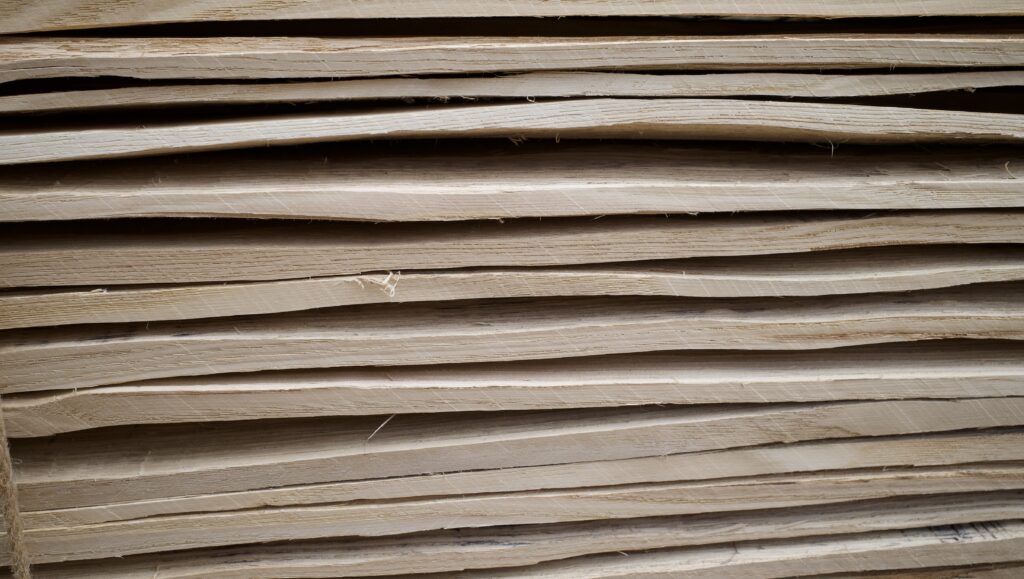






From the Field — Enku Shrine Roof, Hida Folk Village
In 2025, I took part in re-roofing a small shrine housing an Enku Buddha in Hida no Sato. Using donated sawara cypress wood, the work was carried out with local craftsmen, following traditional techniques such as Sekigaya.
A key challenge was adjusting the overlap (fuki-ashi) using triangular shims to maintain the overall proportion. This was where the logic of the roof revealed itself.

It is adjusted every few courses to maintain the overall proportion.
2025年、飛騨の里の円空仏祠の屋根葺き替えに関わり、寄付されたサワラ材を用い、堰萱の手法で施工。葺き足の調整には三角の調整材が必要で、屋根の論理が露わになりました。
Learning from Existing Roofs
KURE has never been one universal standard.
Its dimensions change according to region, climate, building type, and local craft tradition.
榑に唯一の規格はありません。
地域、気候、建物、職人の知恵によって、その姿は変わります。
2026.04 - Meijiza Theatre, Kashimo
A visit to Meijiza, where traditional KURE roofing has been preserved. The boards used here are made of sawara cypress, relatively thin, approximately 6 mm, with a shorter length around 1.5 shaku.
This contrasts with the longer and thicker KURE observed in Takayama Jinya, suggesting that regional and architectural differences shaped the material.
The site also revealed a concern: once the current roof is replaced, there may be no further opportunity to use KURE. This raises a broader question — not how KURE was used, but how it may continue.
2026年4月|加子母・明治座
榑屋根が現在も維持されている明治座を訪問。
使用されている榑はサワラ材で、比較的薄く(約6mm)、長さも1尺5寸程度と短い。高山陣屋の榑とは異なる仕様であり、地域や建築によって榑の形が変化していることが確認できます。一方で、次回の葺き替え以降、榑が使われる機会がなくなる可能性も示唆されており、榑が「どう使われてきたか」ではなく、「どう残していくか」という課題が浮かび上がります。

2026.03 - Takayama Jinya
Field observations show that multiple forms of KURE were used.
Half Kure (Han-gure)
- Wood species: Sawara cypress
- Length: 1.5 shaku (approx. 45 cm)
- Thickness: 1.5 bu (approx. 4.5 mm)
Long Kure (Naga-gure)
- Wood species: Sawara cypress
- Length: 2.5 shaku (approx. 75 cm)
- Thickness: 3 bu (approx. 9 mm)
This suggests that KURE was not a single standardized material, but a system adjusted according to architectural needs.
高山陣屋では、複数の榑が使い分けられていることがわかります。
半榑(はんくれ)
- 樹種:サワラ
- 長さ:1尺5寸(約45cm)
- 厚み:1.5分(約4.5mm)
長榑(ながくれ)
- 樹種:サワラ
- 長さ:2尺5寸(約75cm)
- 厚み:3分(約9mm)
これは榑が単一規格の材料ではなく、建築的必要に応じて設計された素材体系であったことを示しています。

Ongoing Question
- How does chestnut age over time?
- How does drying affect movement?
- What is the role of heat in splitting?
- Can KURE be used beyond roofing?
- How can traditional logic remain alive today?
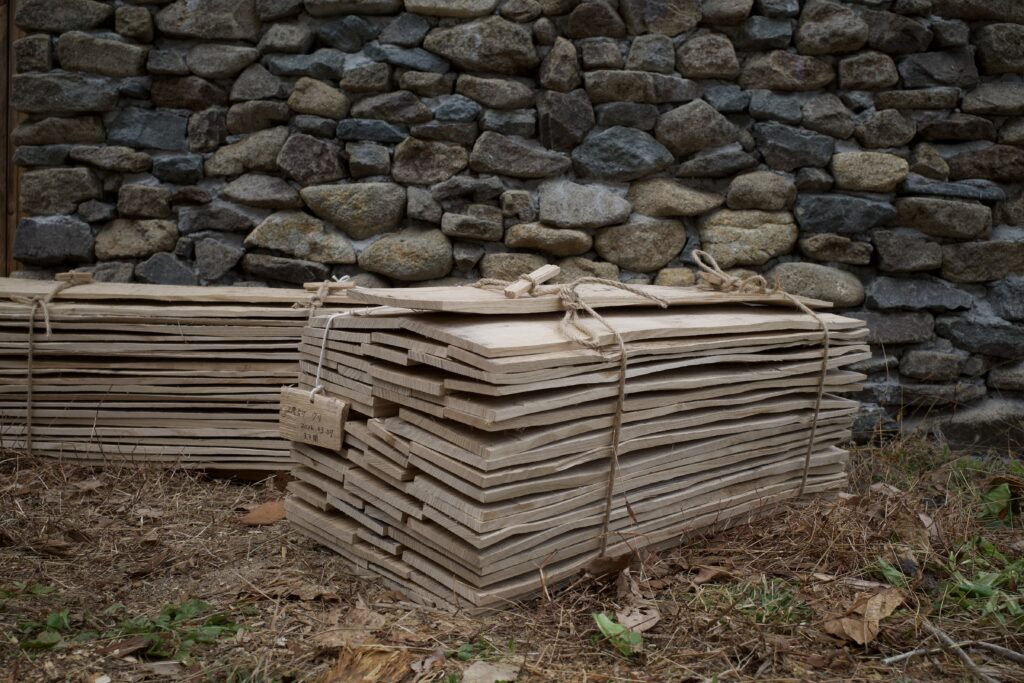
Research Archive
2026.03 - Takayama Jinya Field Note
The presence of both Half Kure and Long Kure suggests that KURE was not a single fixed material, but a system adjusted to different architectural needs.
Traditional names such as Han-kure and Naga-kure also preserve a vocabulary that is rarely heard today.
高山陣屋に半榑と長榑の両方が見られることは、榑が一つの規格材ではなく、建築に応じて使い分けられていたことを示している。また、「半榑」「長榑」という名称そのものが、今では失われつつある建築の言葉を残している。
2026.04 — Source Note: Reading the Tree Before Felling
A local source describes how the quality of a tree could be tested before felling it. By removing a small piece of bark and splitting the exposed fibers, people could judge whether the tree was likely to split well. This suggests that selection began while the tree was still standing. Trees were not cut blindly, but read in advance.
地域資料には、木を伐る前にその素性を見極める方法が記されている。立木の皮を少し剥ぎ、その部分を裂くことで、割れやすい木かどうかを判断したという。選木は伐採後ではなく、立木の段階から始まっていた。木はむやみに切られるのではなく、あらかじめ読まれていた。
Sources / 出典
『むかしの暮らしとちえ』(久々野ふるさと文庫)
2026.04 — Source Note: How Much Could One Craftsman Produce?
Historical sources describe different amounts of daily production for a skilled KURE craftsman.
Some records mention three bundles per day, while others refer to 500 boards.
A bundle may have contained around 50 boards, but bundle sizes themselves likely varied by region and local practice.
Rather than a single universal standard, output likely depended on region, dimensions, timber quality, and working conditions.
Craft was measured not only in numbers, but in context.
一人前の榑職人が一日にこなす量について、資料によって記述が異なる。ある記録では3束、別の資料では500枚とされている。一束はおおよそ50枚前後と考えられるが、束の仕様そのものも地域や現場によって異なっていた可能性がある。これは単一の基準があったというより、地域、寸法、材質、作業条件によって生産量が変わっていたことを示している。ものづくりは、数字だけでは測れない文脈の中にあった。
Sources / 出典
- 『むかしの暮らしとちえ』(久々野ふるさと文庫)
- 『萩原の職人衆』(はぎわら文庫 第7集)
Closing
The split surface reveals the hidden order inside a tree.
KURE is not only a material from the past.
It is a way to rediscover how wood wants to be used.
割裂面には、木の内部の秩序が現れます。
榑は過去の材料ではありません。
木が本来どう使われたがっているかを、もう一度知るための技術です。