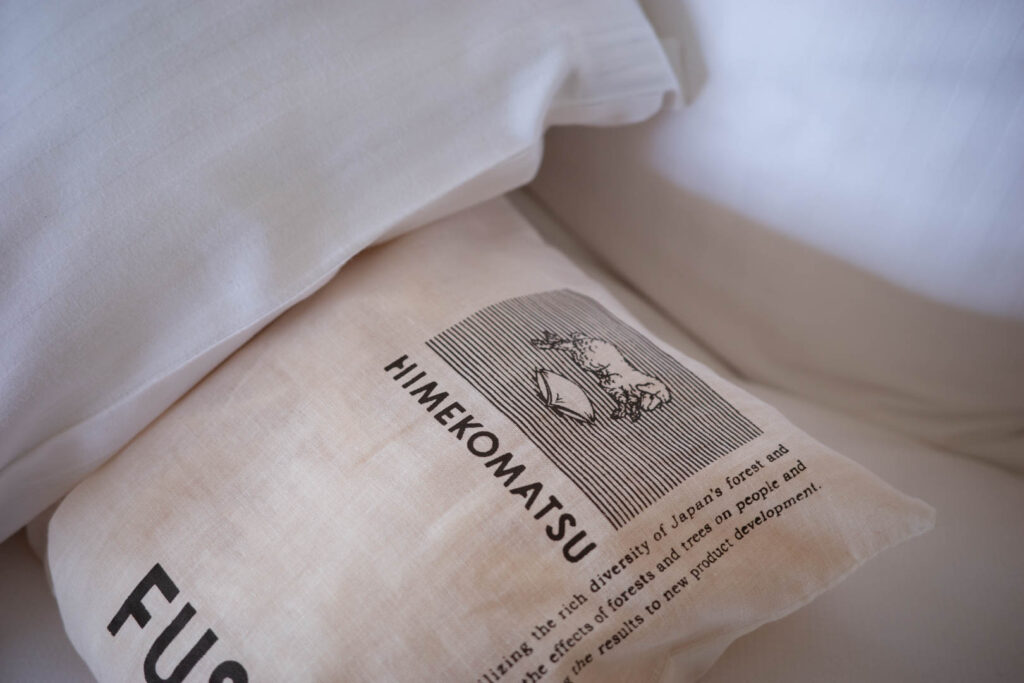





Himekomatsu
Himekomatsu is an ongoing study exploring how people respond to the subtle qualities of wood.
Through research, making, and its use in furniture and space, FUSHI explores how the characteristics of this wood can be understood and carried into contemporary life.
ヒメコマツHIMEKOMATSUは、木が持つ繊細な性質に人がどのように応答するのかを探る、継続的な研究です。
研究、ものづくり、家具や空間での実践を通して、ヒメコマツという木の特性をどのように理解し、現代の暮らしへつなげることができるのかを探っています。
About Himekomatsu
Himekomatsu (Japanese white pine) grows naturally in the Hida region and has long been used as a local material.
It was used not only for wooden patterns in manufacturing, but also as building timber. In the past, more commercially valuable timber such as hinoki cypress was often sold, while Himekomatsu was used for people’s own houses.
As building and manufacturing practices changed, however, many of these traditional uses declined. Today, Himekomatsu remains part of Hida’s forests, while its role as a material has become increasingly limited.
ヒメコマツは飛騨地域に自生し、古くから地域の中で利用されてきた木です。
木型の材料としてだけでなく、建築材としても使われていました。かつては、より商品価値の高いヒノキなどを売って現金にし、自分たちの家にはヒメコマツを使うという暮らしもありました。
しかし、建築や製造方法の変化とともに、こうした用途は減少していきました。現在もヒメコマツは飛騨の森林に存在していますが、素材として利用される機会は少なくなっています。

Research Origin
As the traditional uses of Himekomatsu declined, FUSHI began exploring new possibilities for the wood.
Around that time, gas chromatography became available at the Gifu Prefectural Research Institute for Human Life Technology in Takayama. An exploratory analysis of Himekomatsu revealed several volatile compounds, including (-)-bornyl acetate.
Searching for information about the detected compounds led to research by Professor Kuniyoshi Shimizu on (-)-bornyl acetate and sleep. This raised a new question: what might happen if Himekomatsu itself were used in a bedroom environment?
That question eventually developed into collaborative research with Professor Shimizu, launched with support raised through the academic crowdfunding platform academist.
研究の始まり
こうしたヒメコマツの利用が減少する中で、FUSHIではこの木を新たに生かす方法を考え始めました。
ちょうどその頃、高山市内の岐阜県生活技術研究所にガスクロマトグラフィーが導入され、試験的にヒメコマツの成分を分析しました。その結果、揮発性成分の一つとして(−)-酢酸ボルニルが検出されました。
検出された成分について調べる中で、清水邦義先生による(−)-酢酸ボルニルと睡眠に関する研究に出会いました。そこから、「ヒメコマツそのものを寝室に使ったらどうなるのか」という問いが生まれました。
この問いが清水先生との共同研究へと発展し、academistによるクラウドファンディングを通して研究が始まりました。
Research Context (2019–2021)
From 2019 to 2021, FUSHI collaborated with Kyushu University to investigate how extremely low concentrations of volatile compounds released from Himekomatsu influence human physiological responses.
Rather than focusing on fragrance itself, the research explored whether people respond to compounds released from the wood even at concentrations below the threshold of conscious smell.
Through scientific observation, the study sought to better understand how people respond to the subtle qualities of wood.
研究背景(2019–2021)
2019年から2021年にかけて、FUSHIは九州大学との共同研究を行い、ヒメコマツから放散される極低濃度の揮発性成分が、人の生理反応にどのような影響を与えるのかを調べました。
香りそのものを強く感じさせることを目的とするのではなく、人が意識的に香りを感じないほどの濃度でも、木から放散される成分に反応するのかを探りました。
科学的な観察を通して、木が持つ微細な性質に人がどのように応答するのかを理解しようとした研究です。

Exploratory EEG Observation

© FUSHI, 2019–2021 Collaborative Research
Research Finding
People responded more strongly to wood at concentrations below the threshold of conscious smell than to stronger aromatic concentrations.
This suggests that the human brain may respond to wood before fragrance is consciously perceived.
Research Method
Between 2019 and 2021, collaborative EEG measurements were conducted under the supervision of Associate Professor Kuniyoshi Shimizu.
The study analyzed theta wave activity at the occipital region (Oz), associated with relaxed yet attentive neural states.
These findings remain exploratory and have not been formally published.
研究結果
人は、香りとして意識できる濃度よりも低い濃度の方が、より大きく反応する可能性が示されました。これは、人は香りを認識する以前から、木という存在に応答している可能性を示しています。研究方法
2019〜2021年にかけて、九州大学 清水邦義准教授の指導のもと、脳波(EEG)測定による共同研究を行いました。後頭部(Oz)のθ波活動を解析し、木材成分に対する神経応答を調べました。
※本研究は探索的研究であり、現在も継続的な検討を行っています。

Material Practice
The research did not end as data. It continued in material form.
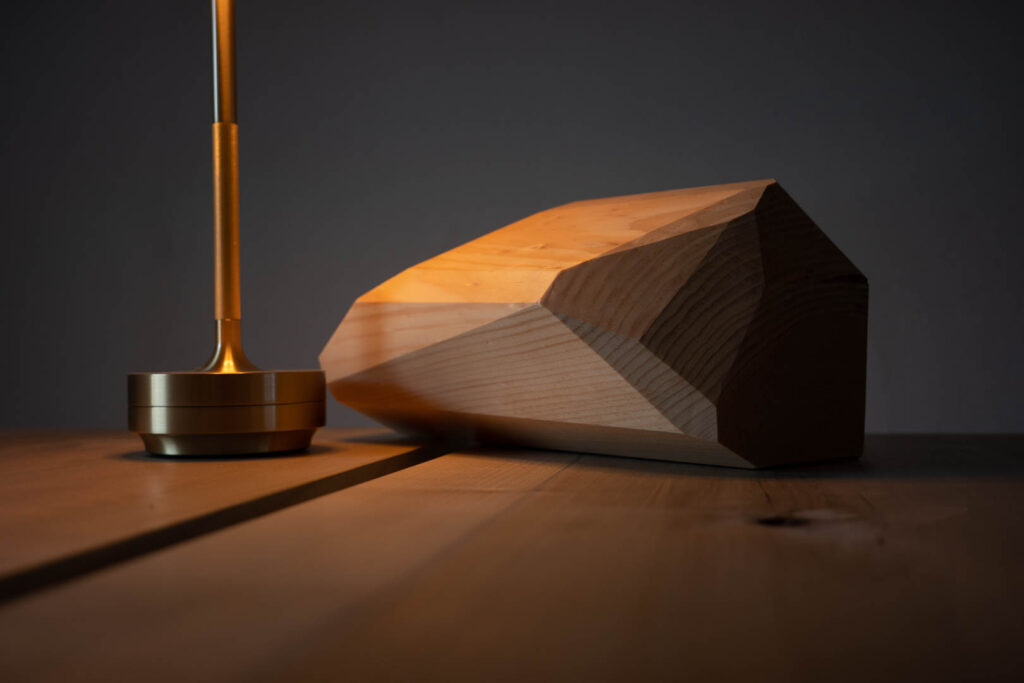
Himekomatsu is naturally air-dried and hand-planed.
Nothing is added.
Nothing is intensified.
The material is simply allowed to remain close to its original state.
素材としての実践
研究は、データで終わりませんでした。素材という形で続いています。ヒメコマツは天然乾燥し、鉋で仕上げています。香りを加えることも、強めることもありません。素材が本来持つ微細な存在を、そのまま残すためです。
Himekomatsu in Space
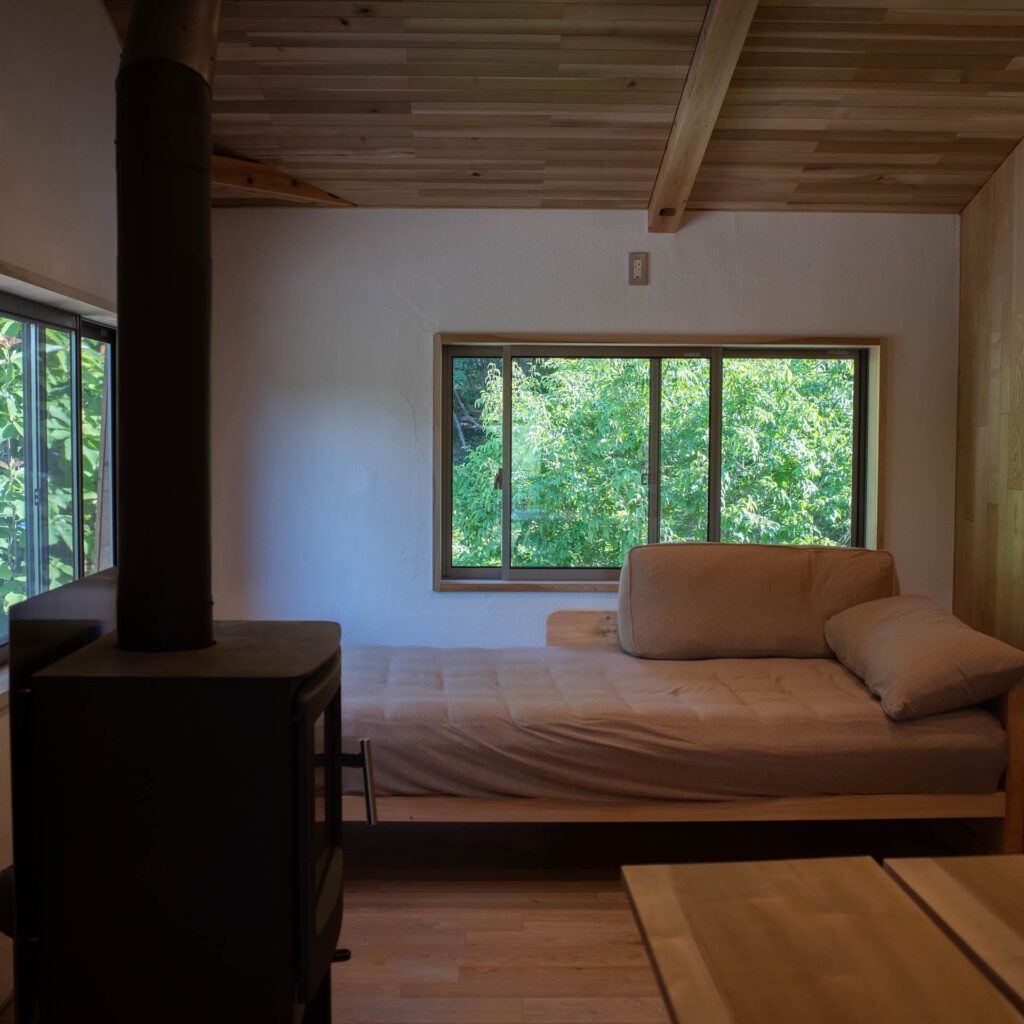
Himekomatsu has also been explored as a material for furniture and interior spaces.
Its use extends the research beyond observation, allowing the qualities of the wood to become part of everyday environments.
ヒメコマツは、家具や空間のための素材としても実践を重ねています。
研究によって木を観察するだけでなく、その特性を日常の環境の中で実際に使いながら考えています。


Beyond Fragrance
Himekomatsu is not intended to be experienced as fragrance.
Its scent is extremely subtle—often barely noticeable.
What matters is not intensity, but the relationship between material presence and human perception.
香りの先へ
香りは、この素材の主役ではありません。木がそこに存在すること。
その存在に、人がどのように応答するのか。私たちが探究しているのは、その関係です。

Presence
Presence does not need to announce itself. It simply remains. Himekomatsu is not designed to attract attention.
It invites us to notice what is already there.
木は、目立とうとはしません。ただ、そこに在るだけです。私たちが向き合いたいのは、その静かな存在です。

Objects from Himekomatsu
Small objects made from Himekomatsu are available in limited quantities.
They are one way of bringing the material into everyday life.
ヒメコマツから生まれた小さなものを、少量ずつ販売しています。
素材を日常の中で感じるための、一つの形です。
Special thanks
2019 crowdfunding special supporter / Kikumi Takano